
Thermal Imaging with IM Home Inspections!
Thermal Imaging, also called Infrared Imaging or simply IR photography, uses a camera that detects differences in temperature to see things that may not be visible.
This technology is not X-ray vision. It measures differences in surface temperature. This difference can sometimes help an inspector identify conditions that warrant further investigation. Its effectiveness depends heavily on conditions at the time of the inspection, including indoor and outdoor temperatures, recent weather, and whether heating or cooling systems are operating.
The greater the temperature difference, the clearer the image is. For example, if it is 95 degrees outside, but you have been running the AC set to 78 all day, a thermal image can show great detail about an exterior wall. However, with an interior wall, where both sides are the same temperature, the camera will likely not show anything at all.
Thermal Imaging is useful for:
-
- Determining water leaks or moisture intrusion when combined with a moisture meter.
- Overheating electrical elements
- Missing or differences in insulation
- Heating and Air Conditioning (HVAC) anomalies
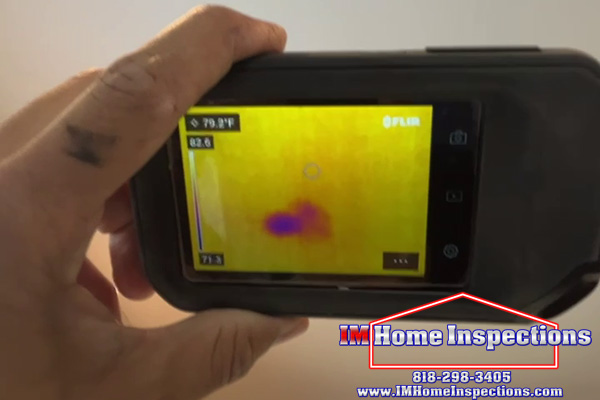
A thermal imaging camera is one of the many tools our inspectors have available during a home inspection. It can help identify unusual temperature patterns that may give us a reason to take a closer look at an area that otherwise appears normal.
For example, a cooler area on a ceiling or wall may indicate possible moisture. The camera can help an inspector identify temperature patterns consistent with moisture, including in areas that may be difficult to physically reach. When accessible and appropriate, the inspector may use a moisture meter or other observations to further evaluate the area.
Thermal imaging can also help identify unusual heat at electrical components, temperature differences associated with missing or inconsistent insulation, and patterns that may help us evaluate the operation of heating and cooling systems.
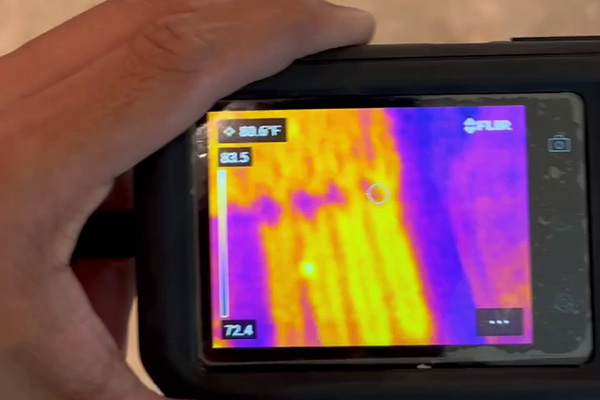
Why We Use Thermal Imaging
This is why we view thermal imaging as a tool used as part of an inspection rather than a separate inspection by itself. The thermal camera can provide additional information, but that information must be considered along with what the inspector can see, test, measure, and observe throughout the rest of the home.
Every IM Home Inspections inspector carries a thermal imaging camera and may use it during the inspection when conditions warrant. Thermal imaging is included as part of our home inspections at no additional charge.
Book your home inspection by calling 818-298-3405 or book online here.
Note: Thermal Imaging can not detect leaks that have dried, nor leaks that may potentially happen. IR can not detect rain leaks if it is not actively raining.
Its effectiveness depends on conditions at the time of the inspection. Including indoor and outdoor temperatures, weather conditions, recent operation of heating and cooling systems, and other environmental factors. Some conditions may not produce a detectable temperature difference at the time of the inspection. Thermal imaging does not guarantee the detection of concealed moisture, leaks, missing insulation, electrical problems, or other hidden conditions.