
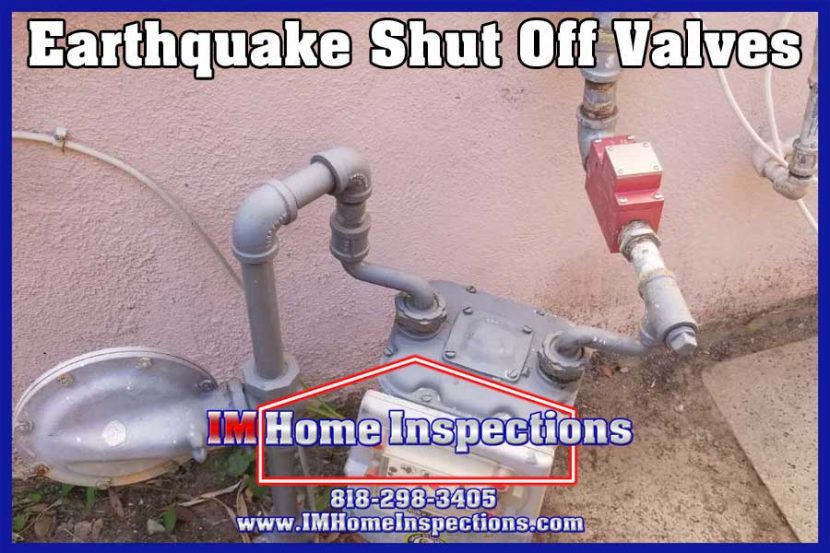
Earthquake shut-off valves, also known as seismic shut-off valves, are devices that stop the flow of gas in a home in the event of an earthquake. They are usually located on or near the gas meter of a home. Shut-off valves are a key safety device to prevent fires after an earthquake.
Background
The famous earthquake that hit San Francisco in 1906 is known for the amount of destruction it caused. However, most of the destruction was caused by fires breaking out after the earthquake, and not the earthquake itself. The fires were mostly caused by damaged gas lines. The fires ravaged the city for days long after the earthquake had come and gone. After the 1994 Northridge earthquake, per the Los Angeles Times, about 20% of the homes visited by the gas company had some gas line damage. Damaged gas lines are an extreme fire hazard.
How they work
There are several types of gas shut-off valves. Most operate with an internal ball or lever that, if shaken enough, will fall into the pipe and block the flow of gas. Earthquake shut valves are designed to activate and shut off the gas if they detect an earthquake with a magnitude of 5.4 or higher.


Where required
Earthquake shut-off valves are required in all 120 districts and neighborhoods within the City of Los Angeles, including such areas as Reseda, Northridge, Woodland Hills, Silver Lake, etc. As of this writing, shut-off valves are also required in the cities of Malibu, Santa Monica, and West Hollywood.
Outside of these areas, requirements vary widely. Some cities do not require seismic shut-off valves at the time of sale, while others may require them during permitted work or under specific conditions. These areas include Beverly Hills, Santa Clarita, Burbank, and most of Ventura County, such as Simi Valley or Thousand Oaks. However, over time, more and more local jurisdictions are adopting the recommendation, and this list can (and will) change without notice.
Update: The City of Agoura Hills began requiring shut-off valves in 2023.
Update II: The City of Calabasas began enforcing seismic shut-off valves in 2025
However, even in areas where earthquake shut-off valves are not required, they are still highly recommended as an upgrade, because earthquakes do not know city limits.
Accidental triggering
The most common problem that happens with an earthquake shut valve is it being accidentally triggered, often by a person or animal bumping into it. My old house had an issue with neighborhood cats using the gas meter as a step to jump the fence, shaking the valve and shutting off the gas to my house.
Installation Problems
Occasionally, we find a gas shut-off valve installed incorrectly. This is very dangerous because a valve not installed correctly will not shut off the gas in the event of an earthquake.
Some valves are designed around the flow of gas going down a pipe, and some are designed for the gas flowing horizontally across a pipe. Therefore, it is important the right valve be matched with the gas pipe installation. Incorrect installations should be corrected by a qualified plumber.
Note: Without an actual earthquake, it is impossible to test a shutoff valve for effectiveness during a home inspection.
To book your home inspection, call 818-298-3405