Why Your Shower in California Feels Weak and not hot enough compared to what you think it should feel like.
You move into a new home—or even a remodeled one—turn on the shower, and something just feels… off.
The water pressure is underwhelming. You never quite get the temperature as hot as you want. It’s not bad, exactly. But it’s also not the kind of shower you were expecting—especially if you just paid a lot of money for the house.
And no, you’re not imagining it.
In many cases, your shower isn’t underperforming because something is broken. It’s underperforming because it was designed that way.
Why Your California Shower Feels Not That Hot
Let’s start with temperature, because this is where most people get frustrated.
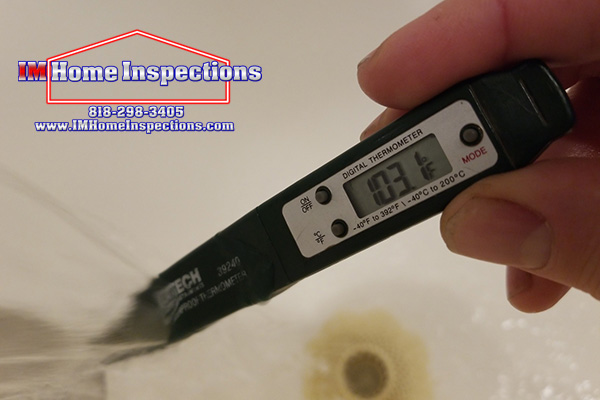
Modern showers use something called an anti-scald valve. It’s a safety feature that prevents the water from getting dangerously hot, which sounds great in theory—and in many ways, it is. Sometimes they are called a mixing value. This valve mixes a certain amount of cold water into the hot water side, so that even if you set a shower to be only hot water, you still get some cold water mixed in. The problem is that often plumbers don’t want the liability of someone getting burned by hot water. To avoid getting sued, plumbers frequently set the mixing valve to mix in more cold water than you might want. The result is a shower that never quite gets as warm as it could, even when your water heater is working perfectly.
And of course, it’s not like there’s a simple dial labeled “make shower hotter.” The mixing valve is often buried behind the handle, often requiring partial or complete disassembly of the shower handles. Homeowners often have to call a plumber to redo what the original plumber did.
Why Your California Shower Water Pressure Feels Weak
Then there’s the pressure issue, which in California is where things really start to show up.
California has strict water conservation laws, and that includes limits on how much water can flow through your showerhead. Most modern shower heads are restricted to around 1.8 gallons per minute, sometimes even less. Compare that to older homes, where showers could easily push 2.5 gallons per minute or more, and you start to understand why newer showers can feel weak—even if the plumbing system itself is perfectly fine.
And it’s not just the showerhead. Pressure regulators are often installed at the main water line to keep the home within a “safe” range, typically around 50–80 PSI. Again, this protects the plumbing system and reduces water waste, but it also means you’re not getting that high-pressure, hotel-style shower experience.
Add in mixing valves, flow restrictors, and water-saving fixtures all working together, and you end up with a system that’s technically doing exactly what it was designed to do—just not what you want it to do.
Why Even Luxury Homes Have This Problem
Here’s the part that surprises a lot of buyers.
This isn’t just a “starter home” issue.
We see this in $2 million homes. $5 million homes. Brand new construction. High-end remodels with beautiful finishes and top-tier fixtures.
The shower looks incredible. It feels… average.
That’s because all of these same rules still apply. The same anti-scald requirements and the same flow restrictions. Even in a shower that looks like a spa treatment center. In many cases, luxury builders are actually more cautious, not less, because they’re trying to avoid callbacks, complaints, and liability.
So you end up with a shower that checks every box on paper—but doesn’t quite deliver the experience you expected.
But It’s Not A Defect
From an inspection standpoint, this is important to understand.
None of this is a defect.
If the shower produces hot water, maintains a stable temperature, and delivers adequate flow, it’s considered functional. But “functional” doesn’t always mean “satisfying,” and that’s where expectations can get out of sync—especially at higher price points.
The good news is that some of this can be improved.
In many cases, the anti-scald valve can be adjusted. A better-designed showerhead can make the water feel stronger even within the same limits. But there are also constraints you won’t fully overcome without major changes, especially when it comes to state regulations.
So if your shower feels a little disappointing, don’t assume something is wrong.
It might just be California doing what California does.
Book your home inspection by calling 8818-3405 or book online here.