
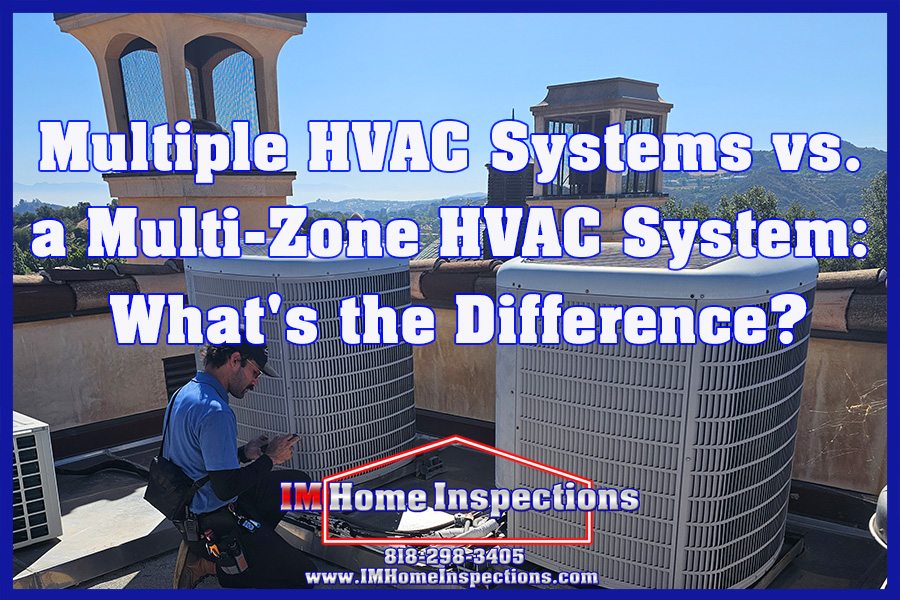
When shopping for a home, especially a larger one, you may hear someone mention that the property has “multiple HVAC systems” vs “multi-zone HVAC system.” While these terms sound similar, they describe two very different ways of heating and cooling a home.
Understanding the difference can help you better understand how your home’s comfort system works, what maintenance to expect, and what future repair or replacement costs may look like. Both systems are usually only found on larger homes, though occasionally they are added to a modest-sized home for additional comfort.
What Are Multiple HVAC Systems?
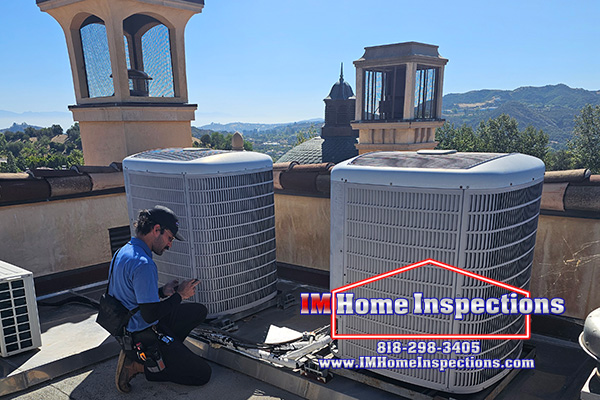
A home with multiple HVAC systems has two or more completely separate heating and cooling systems.
For example, a two-story home may have one furnace and air conditioner dedicated to the first floor and a second furnace and air conditioner serving the upstairs. Each system has its own equipment, thermostat, electrical components, and refrigerant lines. Sometimes we see one system control the left side of the home and the other system serve the right side.
Because they are independent systems, they can often be serviced or replaced separately. For example, you could potentially run the heater upstairs while running the AC downstairs.
What Is a Multi-Zone HVAC System?
A multi-zone HVAC system uses a single heating and cooling system to serve different areas of the home.
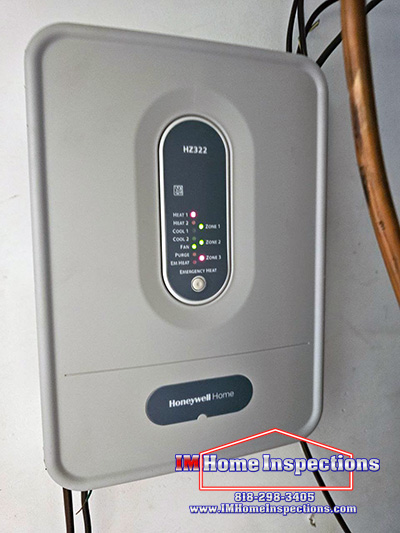
Instead of having multiple furnaces or air conditioners, the system uses motorized dampers installed inside the ductwork. These dampers open and close to direct conditioned air where it is needed.
Each zone has its own thermostat so you can control the on/off and the temperature in each zone separately by controlling dampers in the ductwork. Note: you can NOT have the heat on in one zone and AC in another zone, because they use the same fan to blow air through the system. The dampers are controlled by a small computerized controller, often found in the attic or near the heater.
An important note is that these systems are complex and have many hidden parts such as internal baffles and internal sensors that are NOT visible. Determining the balance, the uniformity, temperature, flow, distribution, size, capacity, BTU, or supply adequacy of a multi-zone system is beyond the scope of a general home inspection. The client may wish to have a qualified HVAC contractor who understands multi-zone systems further evaluate. Because zoning systems can be very complex, not every HVAC tech is qualified to look at multi-zone systems.
Multiple HVAC Systems vs. a Multi-Zone HVAC System
Although both systems allow different areas of the home to have different temperatures, they accomplish that goal in different ways.
| Multiple HVAC Systems | Multi-Zone HVAC System |
|---|---|
| Two or more complete HVAC systems | One HVAC system serving multiple zones |
| Multiple furnaces and/or air conditioners | One furnace and/or air conditioner |
| Separate equipment for each area | Motorized dampers divide airflow |
| Independent maintenance and repairs | Complex maintenance |
| Greater redundancy if one system fails | Fewer major components, more smaller components |
Which Is Better?
Neither approach is automatically better.
Multiple HVAC systems often perform well in larger homes because each system only has to condition part of the house. They also provide some redundancy. If one system stops working, another portion of the home may still have heating or cooling. They are also less complex, have fewer parts to go wrong, but overall cost more to replace.
Multi-zone HVAC systems can improve comfort while reducing the amount of equipment installed. Because there is only one primary heating and cooling system, they cost less to replace compared to multiple systems. The trade-off is that they are more complex with many smaller parts to maintain, and require servicing from HVAC techs that are properly trained in zoned systems.
Can a Home Have Both?
Yes.
Many larger and luxury homes actually have multiple HVAC systems, and each of those systems may also be divided into multiple zones.
For example, a 7,000-square-foot home might have three separate HVAC systems. One system could serve the main living areas, another the bedroom wing, and a third the guest house. Each of those systems could also have two or three independently controlled zones.
This is why it’s important not to assume that “three zones” means the home has three HVAC systems.
Multiple Air Handlers tied to One Condenser
Another type of HVAC system that has become increasingly common in newer homes and remodels. It is a variation of a heat pump system.
This newer style system uses a single outdoor condenser connected to multiple indoor air handlers. These are often referred to as multi-split or variable refrigerant systems, depending on the manufacturer and design. Some people still refer to them as a zoned system. They use multiple mini-split air indoor handlers
Although there is only one outdoor unit, each indoor air handler can typically be controlled independently, allowing different rooms or areas of the home to have their own temperature settings.
At first glance, these systems can look like either multiple HVAC systems or a traditional multi-zone system. In reality, they are a different type of design altogether.
Why This Matters During a Home Inspection
During a home inspection, each accessible HVAC system is evaluated separately. If a home has multiple systems, each furnace, air handler, heat pump, or air conditioner is inspected individually.
If the home has a zoned system, the inspector will typically operate the thermostats and observe whether the zoning responds. However, many zoning components are concealed within the ductwork, so inspectors cannot verify every internal damper or control mechanism during a standard visual home inspection. Further, the inspector can not run a system for hours to see how well the zones affect the comfort of a home over time.
Understanding whether a home has multiple HVAC systems or a multi-zone HVAC system can also help buyers better understand future maintenance needs and replacement costs.
Book your home inspection by calling 818-298-3405 or book online here.