

Pool drains are misnamed and are one of the more confusing parts of a swimming pool.
Let’s clear up five common misconceptions about swimming pool drains.
1. It’s Not Actually a Drain
Despite the name, a swimming pool’s drain is NOT actually a drain. It is NOT designed to empty the pool.
Its main purpose is to help circulate water through the pool’s filtration system.
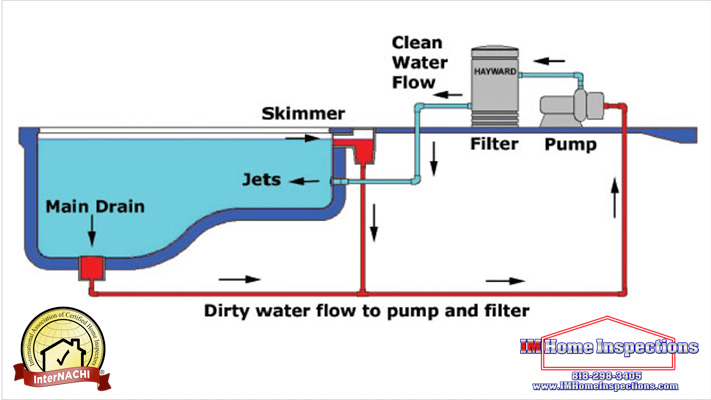
Here’s how it works: The pool pump draws water from the pool through the skimmer and, in many systems, the drain. That water passes through the filtration equipment before returning to the pool through the return jets.
The misnamed drain allows water to be drawn from the lower portion of the pool, while the skimmer collects water from the surface.
Together, these components help keep water moving and allow the filtration system to do its job. The drain is NOT connected to the home’s sewer system.
2. Pool Drains Don’t Have to Be at the Very Bottom
Here’s something that surprises a lot of people: A pool drain doesn’t necessarily have to be located at the absolute lowest point of the swimming pool.
In a bathtub or shower, the drain is at the lowest point because gravity needs to carry the water toward it.
But in a pool, the purpose is for the pump to circulate water. So the suction outlets do not have to be positioned at the lowest possible point.
In many modern pools, you may see pool drain covers on the side of the pool.
3. Yes, the Shape of the Drain Cover Matters
Not all pool drain covers are created equal.
Older swimming pools sometimes have flat drain covers or designs that don’t incorporate modern anti-entrapment safety features.
One of the concerns with pool drains is suction entrapment. Under certain conditions, a swimmer can become trapped against a suction outlet by the force created by the pool pump.
This is why drain cover design is so important.
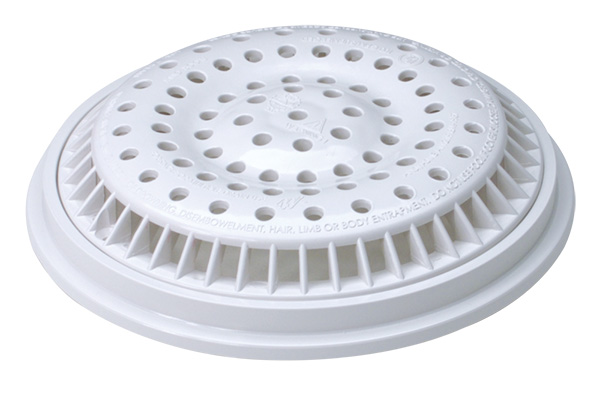
Anti-vortex covers, which often have a raised or domed appearance, are designed to reduce the formation of a vortex and make it more difficult to completely block the opening.
Older-style flat covers were outlawed for sale in December 2007. When building a new pool or remodeling a pool, it’s essential to use newer-style covers.
4. Why Are There Two Pool Drains?
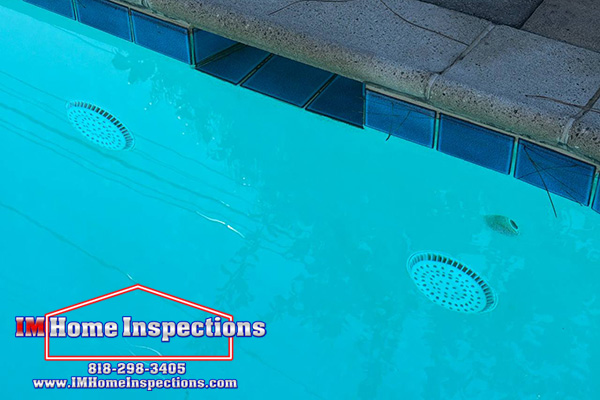
If you’ve looked at the bottom of a swimming pool, you’ve probably noticed that many new pools have two main drain covers, often located a few feet apart.
Why two?
It’s not because one is for draining the pool and the other is for filling it.
The primary reason is safety.
When a pool has only one suction outlet, a swimmer blocking that outlet can potentially experience a dangerous suction entrapment situation.
With two properly designed and interconnected outlets, water can continue flowing through the second outlet if the first becomes blocked. This helps reduce the likelihood of a dangerous pressure differential developing at the blocked outlet.
They’re not redundant. They’re part of the pool’s safety design.
Another benefit is on larger pools, multiple “drains” allows the water to circulate more efficiently.
5. So How Do You Actually Drain a Swimming Pool?
If the main drains aren’t primarily designed to empty the pool, how do you get the water out when you need to?
There are several methods.
Some swimming pools have plumbing and valve configurations that allow water to be discharged through a waste line. Depending on the equipment and plumbing arrangement, this may allow the pool’s circulation system to lower the water level.
The most common method is using a submersible pump, which can be placed near the bottom of the pool to pump water out.
But here’s something important that many homeowners don’t realize:
Completely draining a swimming pool can potentially damage it.
An in-ground swimming pool is subjected to pressure from the surrounding soil and, in some locations, groundwater.
When the pool is full, the weight of the water helps counteract those forces.
Remove the water, and under certain conditions, groundwater pressure can cause a pool shell to lift, shift, or suffer structural damage. This is sometimes referred to as a pool popping out of the ground.
That’s why completely draining an in-ground swimming pool should generally be handled by a qualified pool professional who understands the pool’s construction and local conditions.
And no, simply removing the drain covers isn’t how you empty a swimming pool.
The Bottom Line
Swimming pool drains are a perfect example of how the name of a component can create misconceptions about what it actually does.
They’re primarily part of the circulation system. They don’t necessarily have to be at the lowest point. Their covers serve an important safety function, and having multiple suction outlets is often an intentional part of the pool’s safety design.
At IM Home Inspections, we inspect swimming pools and spas as an additional service during home inspections. Our goal is to help buyers understand the visible condition of these systems, identify potential concerns, and recognize when repairs are necessary. Book your home inspection with a pool inspection by calling 818-298-3405 or book online here.